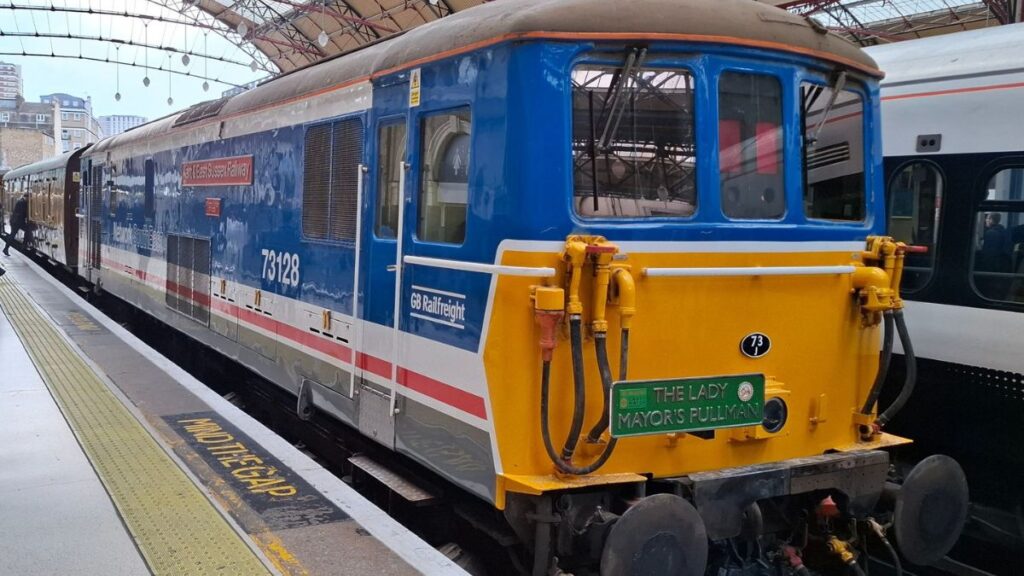
Forty years ago, the Network South East brand was born, an event which has had long lasting benefits for football supporters to this day, despite only lasting eight years.
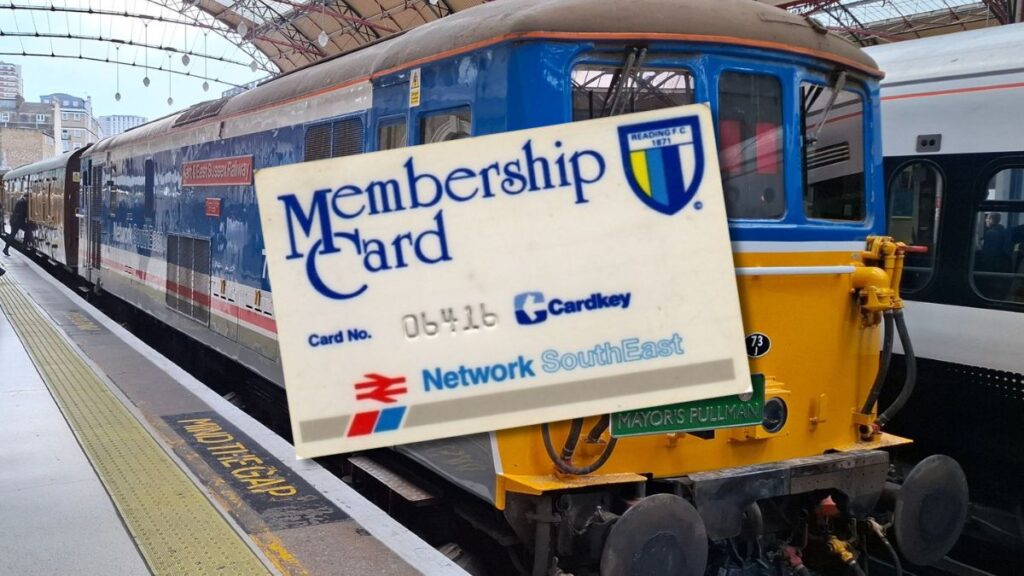
Its roots were planted in 1982 when British Rail rationalised its passenger operations into three sectors: Regional Railways, Inter City and London & South Eastern. On 10th June 1986, the latter was relaunched as Network South East and soon became a striking presence of Berkshire life with its striking red, white and blue livery passing through refurbished railway stations. If this wasn’t enough of a welcome change for supporters travelling to watch their favourite team, it was further enhanced by the introduction of the Network Card which entitled the cardholder to discounted fares throughout the region. Unlike other concessionary cards it was open to all adults and thus offered significant savings.
The link with football was further cemented by the sponsorship of the snappily titled Network South East South Bank Enclosure at Reading’s Elm Park where in anticipation of the introduction of the Thatcher government’s ID scheme for all supporters, entry was only permitted with a branded card. The benefits of also purchasing a Network Railcard were reflected by its eligibility allowing the holder to travel within a region with a very Football League sounding collection of towns and cities around its perimeter. Going from due north clockwise these included Luton, Cambridge, Colchester, Southend, Gillingham, Brighton, Portsmouth, Southampton, Bournemouth, Exeter and Northampton.

However it was non league supporters who stood to benefit most as the region encompassed the entire Isthmian League as well as a good chunk of the Southern. Thus a similar circuit of the Network South East border could take you to Bedford, King’s Lynn, Harwich, Dover, Eastbourne, Weymouth, Worcester, and Banbury.
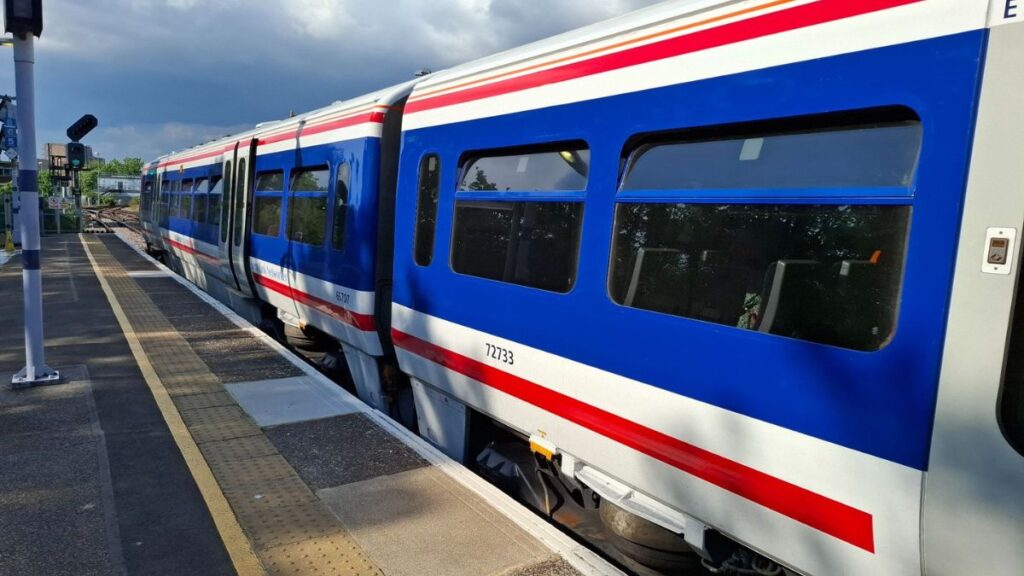
Fortunately although Network South East officially ended on 1st April 1994 when BR was privatised, the Network Card continues to this day, and is perhaps more valuable than ever to the travelling fan, for whom trips around the region can still offer glimpses of its origins in the remaining bright red seats, distinctive red digital clocks and tricolour logos which have survived the many rebrandings since.