


The Thames Valley is one of the cradles of football. The Berks & Bucks FA was formed in 1878; prior to this year, only four other County FAs existed: Birmingham, Shropshire, Staffordshire, and Sheffield & Hallamshire, the latter being the first in 1867.
The alliance of two counties has only one other example: the Leicestershire and Rutland FA was formed in 1887 – an obvious move given that Rutland is almost an appendage to the former. By contrast, the allied counties of Berkshire and Buckinghamshire form a reverse L-shape from Hungerford in the west to Newport Pagnell in the north, an awkward 76-mile cross-country journey on A-roads through a good chunk of Oxfordshire facing the teams of those towns should they be drawn to play each other in the Senior Cup. The reasons for this alliance are lost in the mists of time, but given the first County headquarters was The Bell Hotel in Maidenhead (now O’Neills), it seems fair to assume it was due to the strength of Victorian football in the Thames Valley, with Wycombe, Marlow, Maidenhead, and Windsor straddling the border.
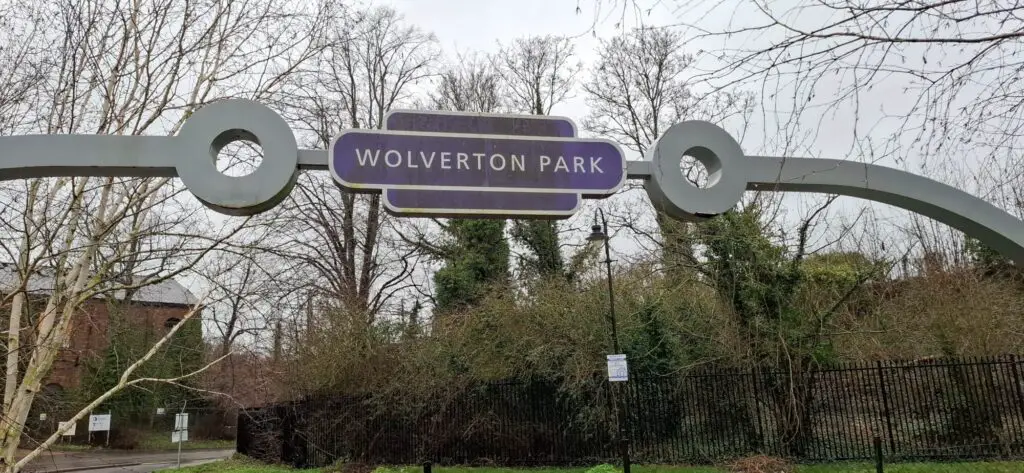
A consequence of this decision was that one club from North Buckinghamshire, Wolverton Town, became a regular opponent for Berkshire clubs, despite playing for most of its history in the Northamptonshire League, which went on to become part of the United Counties League. This meant plenty of opportunities to play at its historic ground, Wolverton Park.
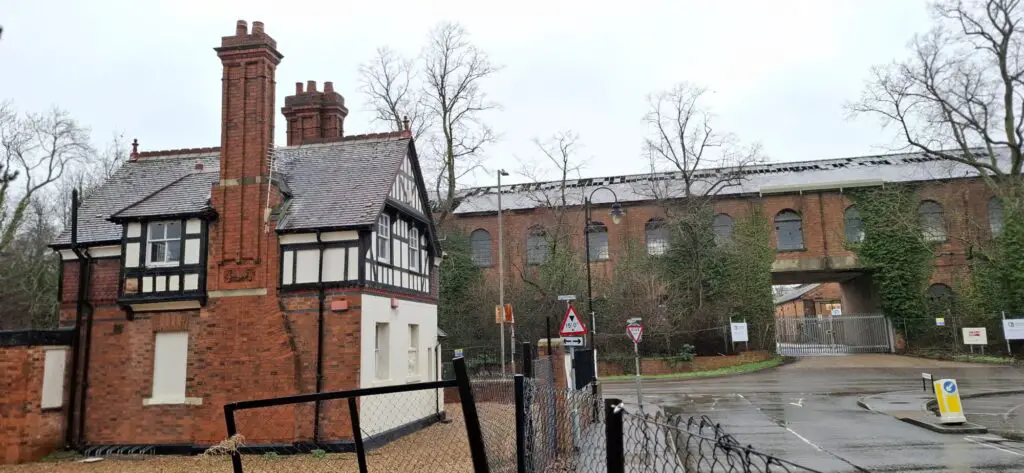
Ironically, given its current status as a suburb of Milton Keynes, Wolverton was a new town developed in 1838 as it was halfway between London and Birmingham on Robert Stephenson’s new railway between the two cities, which would eventually become the London and North Western Railway. The Act of Parliament approving the railway stipulated this location, as it was thought scientifically unsafe for trains at the time to go any further without an inspection. Thus, a massive engineering complex was constructed in Wolverton, initially for the maintenance of locomotives, along with all the ancillary services, including housing to cater for the several thousand LNWR employees. In the 1860s, responsibility for locomotives moved to Crewe, with Wolverton becoming the largest carriage works in Britain, including responsibility for the Royal Train.
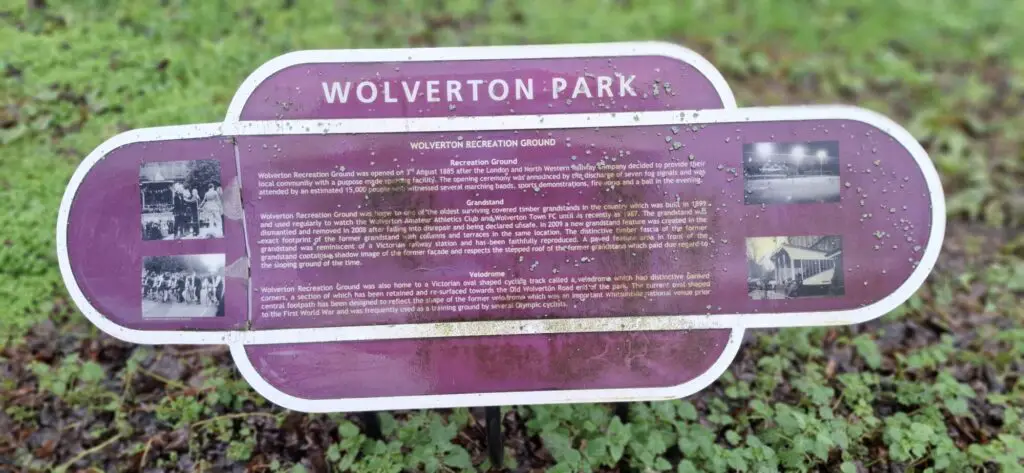
In 1885, the LNWR built a sports ground on the land between the Royal Train shed and the railway line. Seven fog signals heralded its opening on August 3rd, with 15,000 people coming to see marching bands, sports demonstrations, and fireworks. The day ended with a ball. A multi-sports venue, the football pitch was surrounded by a velodrome, a banked oval cycling track which staged big events at Whitsuntide and was used for training by Olympians.
Two years later, Wolverton was founded. Unsurprisingly, given the location, the club’s name often reflected that of the company occupying the site, so they started life as Wolverton London and North Western Railway. For just one season in 1889/90, they boasted the longest club name in English football when they temporarily changed it to Newport Pagnell & Wolverton London and North Western Railway Amalgamated Association Football Club. I pity the terrace wag who shouted: “Give me an N!”
With a ready source of potential footballers at the works, the Railwaymen soon became one of the strongest clubs in Buckinghamshire. They reached the County Cup Final for the first time in 1889. Despite importing some players from Crewe Alexandra, they lost 5-0 to Marlow at York Road. In 1892, they again travelled to York Road for the final, this time to face Reading, having beaten Marlow in the semi-final with only ten men. With such a short journey, the Biscuitmen brought 1,700 supporters with them on special train services. One of these stopped in the siding adjacent to the ground, which enticed its passengers to simply run down the embankment. Police were required to restore order when Reading supporters rushed their way through the gate, lifting it off its hinges. An estimated crowd of 4,000, with 500 watching on the embankment and some climbing trees to get a better view, watched the match, which had to be stopped several times due to the crowd spilling onto the pitch. At half-time, Wolverton “drank mysterious liquor from a jug” to no avail as they again lost, Reading taking the Cup back to the county town with a 2-0 win.
In 1893, it was a case of third time lucky. Having beaten Reading, Marlow, and then Slough in a second semi-final replay at Bletchley, Wolverton comfortably beat Maidenhead 3-0 in the final, cheered on by four special train loads of supporters, in what was to be their only County Cup triumph.
League football started in the South of England when the Southern League was formed in 1894. Reading started in Division One, while Maidenhead and Chesham were in Division Two. Wolverton joined the lower division in 1895, and this season saw them play Maidenhead eight times, starting with an FA Cup tie at Wolverton in November which ended 1-1. The replay at York Road was also drawn 0-0, with Wolverton refusing to play extra time – a decision which led to both teams being summoned to the FA. A second replay at Aylesbury Printers saw Maidenhead, despite being provided “with a saloon car on a direct train by GWR for the team and 30 staunch supporters, arrive too late for a substantial lunch.” Maidenhead were dealt a further blow when Tucker broke his leg in the first half, but the ten men from Berkshire won the tie when legendary striker Jinny Janes scored with a “capital goal” from one of his “characteristic twist shots.”
The first Southern League match between the two clubs took place at York Road on January 18th. Wolverton took an early lead, but Maidenhead equalised before the interval. The Maidenhead Advertiser journalist known as Trifler then “ventured to upbraid one of the front rank at half time for giving what I considered a very feeble display. He responded, ‘Come out and have a try yourself, I shall be glad to get out of it. This isn’t football; it is war. I’m afraid of them and don’t mind saying so.’”
This fear proved justified as Wolverton went on to accrue two cautions and one dismissal when Poole lost his temper and struck Johnson, the Maidenhead keeper. A late winner for Wolverton’s ten men led to Maidenhead supporters at the Park Street end using language “that was anything but parliamentary,” leading the referee to speak to them. Trifler stated “the offenders were of the labouring class, with several boys and hobbe-de-hoys.”
The rivalry between the two teams became even more intense when they met in the 1896 Berks & Bucks Senior Cup Final on Easter Monday. Cup holders Maidenhead brought 400 fans on the football special to Marlow, and in front of a 3,278 crowd, a thrilling 2-2 draw ensued with Wolverton coming from behind twice.
Before the replay, the return Southern League match was played at Wolverton, but Maidenhead opted to send a weakened team featuring reserves and players from the Norfolkians, the junior team in the town, which inevitably led to an easy 7-0 win for the hosts.
The Senior Cup Final replay took place at the new County Cricket Ground in Aylesbury. A football special started at Slough, but the fare was too expensive, which meant that it was less than half full. Two supporters travelled from Maidenhead on a “pneumatic safety” instead. This time, Wolverton took the lead with five minutes to go, leading to their players “turning somersaults down the ground,” but Maidenhead equalised a minute later with a controversial own goal to take the final to a second replay.
This was played at Loakes Park, Wycombe, and ended goalless after 90 minutes. Maidenhead took the lead in extra time and won the cup when, with one minute remaining, a Wolverton equaliser was disallowed due to a foul on the keeper. The match ended in rancour. Having received the cup, Maidenhead’s captain Walton was shouldered by his team to be carried triumphantly out of the park, but he was surrounded by “a disorderly mob” and had to be set down for his own safety amid shouts of “down with him” and “smash the cup.” Several policemen then protected Walton as well as Maidenhead supporters who were kicked, with one knocked down, as blows were exchanged.
On the return journey to Maidenhead, ribbons in the club colours of black and red were obtained from a draper’s shop. The train arrived back at 8:40 pm to be met by almost a thousand people. Walton was carried from the station in a procession accompanied by the Maidenhead Brass Band and the Volunteer Drum and Fife band. The team brake was hauled around the town by supporters to the sound of “Hail the conquering hero” among a crowd of 4,000. The players then entered the Bell Hotel, Walton appearing at the window with the cup in his hand to address the crowd. The cup was then filled with champagne.
Wolverton shrugged off the disappointment of losing the final by being crowned Southern League Division Two Champions and then securing promotion through the end-of-season test matches by winning 2-0 at Ilford.
The following season, Wolverton lined up in Division One alongside future Football League teams Southampton, Millwall, Tottenham Hotspur, Swindon Town, and Reading. They won just two matches to finish second-bottom, which meant they again would play in the end-of-season test matches. A 2-0 win at home to Dartford secured Division One football for a second season, but this time a bottom-placed finish led to relegation in the test matches, which took the form of a four-club round-robin group.
A return to Division Two led to an upturn in fortunes as they finished runners-up to Thames Ironworks (now West Ham United), and ahead of Watford, Brentford, Wycombe Wanderers, and Fulham. It is no exaggeration to say at this stage Wolverton were one of the leading football clubs in the South of England.
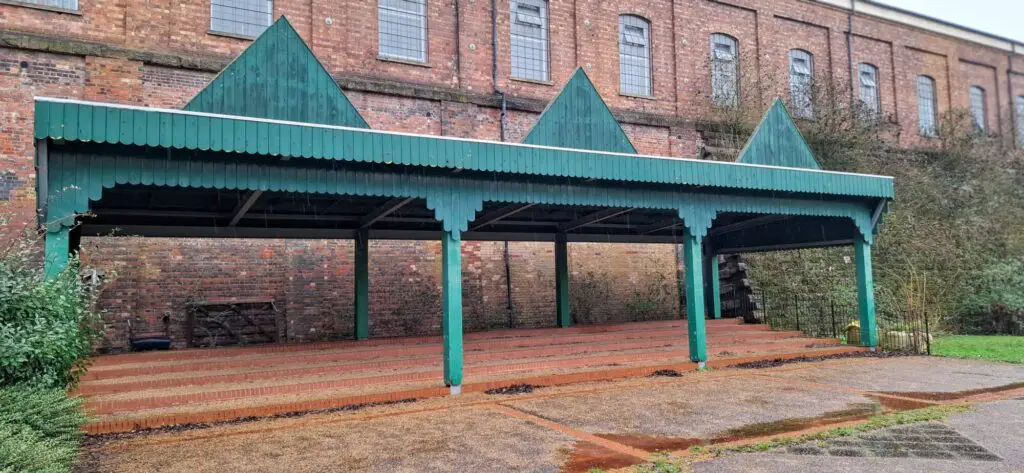
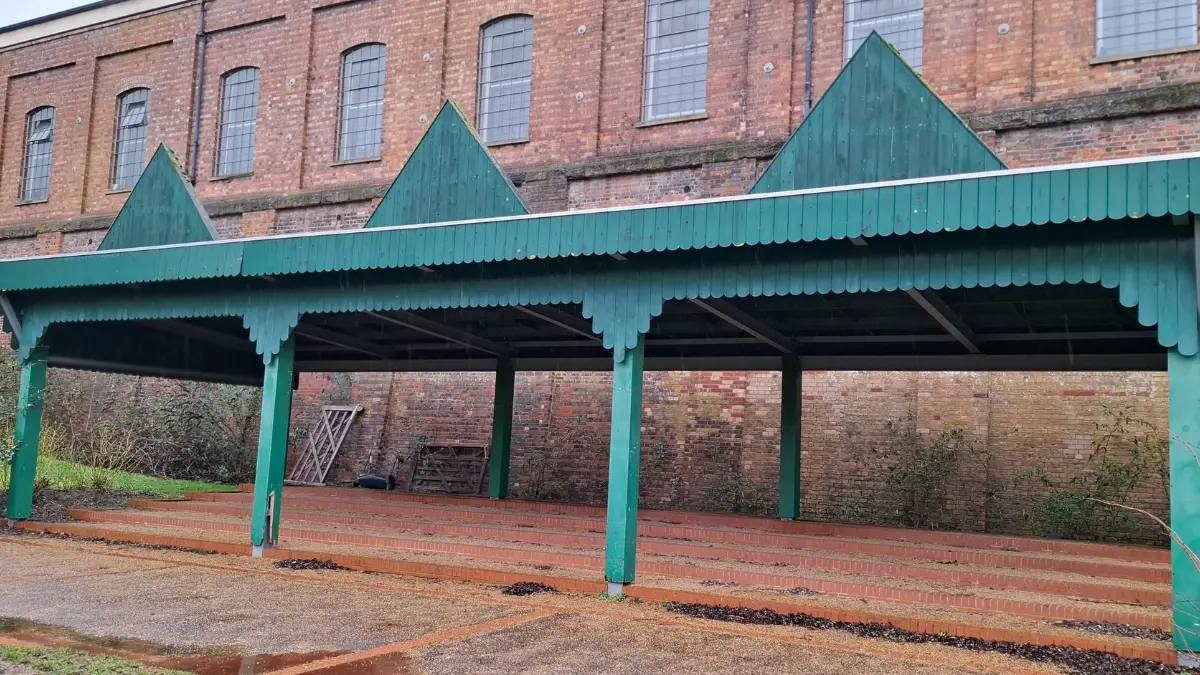
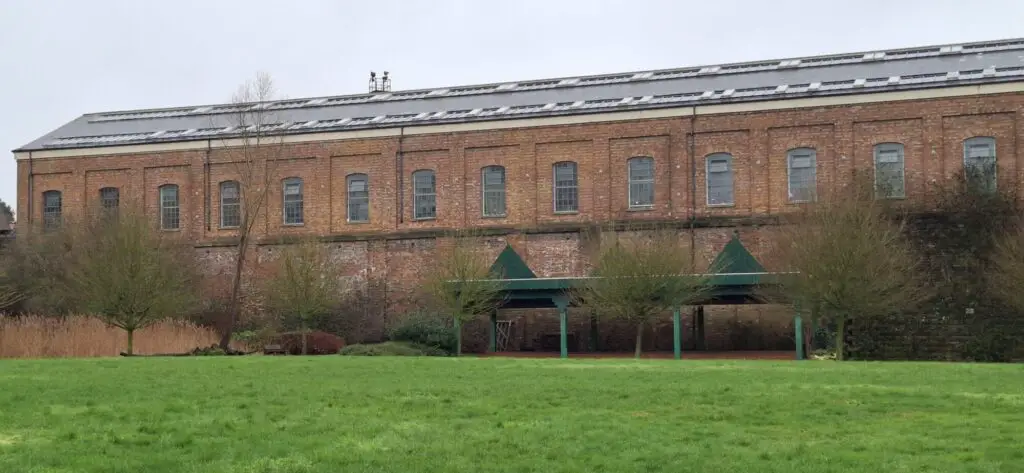
This status was marked by the erection of a wooden stand at Wolverton Park. Standing in front of the Royal Train shed, it was fittingly reminiscent of a timber railway station roof, boasting three gables. Spectators sitting in it would have seen Wolverton again have a strong season in the league, finishing fourth, level on points with runners-up Fulham. However, this proved to be the end of the glory days for the Railwaymen as they elected to leave the Southern League in 1900.
They spent the 20th century as a respected non-league team, changing their name to Wolverton Town & BR following the post-war nationalisation of the railways. Aside from the United Counties League, they also spent time in the South Midlands, Spartan, Isthmian, and Athenian Leagues. They reached the County Cup one final time in 1970 when they lost 3-0 to Maidenhead United at Chesham.
“The latter became the Milton Keynes Dons in 2004 and to this day stands as a testament to a failed project to import a successful Football League club to the city, scarcely matching the achievements of Wolverton LNWR in the late 19th century”
The club then tracked the decline of the British manufacturing industry as BR scaled down their operations in the town. They tried to capitalise on the growth of Milton Keynes to the south, incorporating the new city into their name, but by January 1992, with the finances in a poor state, the resignation of the club secretary was the final straw, and the members resolved to wind up the club. They were replaced at Wolverton Park in 1998 by Milton Keynes City. MK City, as they became known, aimed to build up the club to attract the support of the new local population, but a lack of interest meant they too folded in 2003 amidst the controversy of Wimbledon’s move north. The latter became the Milton Keynes Dons in 2004 and to this day stands as a testament to a failed project to import a successful Football League club to the city, scarcely matching the achievements of Wolverton LNWR in the late 19th century.
Thus, despite its ideal location next to a mainline railway station and set against the spectacular backdrop of the now-listed Royal Train Shed, Wolverton Park ceased to host organised football. The old timber stand, which by now was considered to be one of the most historic football structures in the country, was dismantled in 2008 as it was unsafe. In 2009, a replica was erected on the exact footprint of the old stand. A section of the cycle track also remains in the undergrowth.
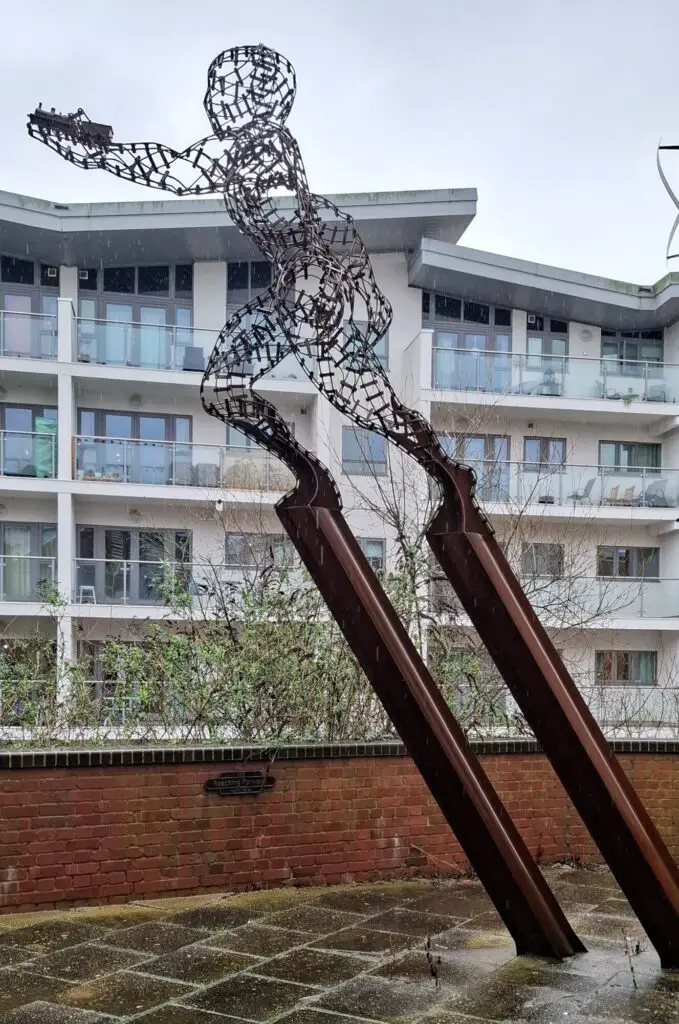
The railway industry maintains a small engineering presence nearby, with the rest of the industrial buildings redeveloped for housing and commercial use. The park remains open to the public and is now a peaceful setting; the frequent roar of the express trains serves as an eerie reminder of the roars of the crowds that had once gathered in the park to cheer on their workmates.
A few miles to the west, Newport Pagnell Town still play in the Berks & Bucks Cup, so if your team is drawn there, take a short detour en route to experience the Victorian splendour of Wolverton Park.
